
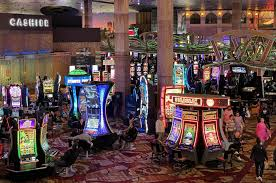
Casino culture includes more than games, hospitality, and formal rules. It also contains a collection of superstitions that visitors have carried into gaming rooms over generations. Some people avoid particular numbers, others keep a lucky charm nearby, and some follow routines they believe will bring good fortune.
These customs can be entertaining, personal, or connected to wider cultural traditions. Their popularity reflects the human desire to find meaning in uncertain situations. When an outcome cannot be predicted with confidence, familiar rituals can make an experience feel more understandable. Click on!
Yet there is an important distinction between cultural tradition and mathematical probability. A superstition may be meaningful to an individual without changing the odds of a game. Exploring the history and psychology of these beliefs helps explain why they remain visible in modern casino environments.
The Origins of Casino Superstitions
Superstitions existed long before modern casinos. Across different societies, people developed customs around numbers, colors, objects, ceremonies, and important events.
These beliefs often emerged in situations where people faced uncertainty and wanted reassurance. Gambling provided a natural setting for such traditions because the outcome of a game may be difficult or impossible for a participant to control.
As gaming became associated with social gatherings and travel, personal beliefs could spread between players. Stories about lucky objects or memorable wins were shared with friends and passed from one generation to another.
Not every superstition originated inside a casino. Some came from broader cultural traditions and were later incorporated into gambling environments. Others developed through individual experiences and became personal routines.
Lucky Numbers and Cultural Associations
Numbers are among the most recognizable elements of gambling superstition. People may favor a number because it appears in a birthday, a family tradition, a religious or cultural context, or a memorable personal event.
Other numbers may be avoided because of associations with misfortune in a particular culture. These meanings are not universal. A number considered fortunate in one setting may carry a different meaning elsewhere.
Casino games can make numerical beliefs especially visible because some activities involve choosing numbers or observing numbered outcomes.
However, cultural significance should not be confused with probability. In a fair roulette game, for example, a particular number does not become more likely simply because someone considers it lucky. The probability depends on the wheel’s configuration and applicable game rules.
The same principle applies to other games: personal preference does not override the mathematical structure of the activity.
The Tradition of Lucky Charms
Lucky charms are another familiar feature of gambling culture. A person might carry a coin, wear a bracelet, keep a small object in a pocket, or bring something associated with a positive memory.
These objects can act as personal reminders. They may help someone feel connected to family, a meaningful event, or a familiar routine when entering an unfamiliar environment.
The charm’s importance often comes from the owner’s interpretation rather than any demonstrated effect on the game.
For some visitors, the practice is entirely playful. They understand that the object has no proven ability to influence random outcomes and simply enjoy the tradition.
Problems can arise if the charm becomes part of a belief that encourages risky spending. No object can guarantee a win, prevent losses, or make it financially safe to continue playing beyond a predetermined limit.
Lucky Clothing and Repeated Routines
Some casino visitors wear particular clothing or repeat a sequence of actions before playing. These habits may develop after a memorable experience in which the person happened to be wearing a specific outfit or following a familiar routine.
Repeated behavior can create a sense of consistency. In an environment filled with uncertainty, a familiar action may make someone feel more prepared.
The difficulty comes when a coincidence is mistaken for evidence. If someone wins while wearing a particular shirt, that does not establish that the shirt caused the outcome. The same outfit may be worn on many occasions without producing the same result.
Routines can be enjoyable when treated as personal traditions. They should not become a reason to ignore game rules, increase bets, or believe that success is guaranteed.
Why Some People Avoid Certain Actions
Superstitions can involve avoidance as well as repetition. Some individuals may refuse to say a particular word, avoid changing seats, or feel uncomfortable when another person touches their belongings.
These habits often reflect an attempt to prevent an unwanted outcome. The person may believe that breaking a routine could bring bad luck, even though there is no reliable evidence of such a connection.
Social expectations can reinforce these beliefs. If a group treats an action as unlucky, members may follow the custom to maintain a sense of belonging or avoid disagreement.
Respecting another person’s harmless preference can be courteous, but no one should feel pressured to follow a superstition or spend money because of it.
Superstitions at Roulette, Blackjack, and Slot Machines
Different games encourage different forms of superstition because their rules and visual features vary.
Roulette
Roulette includes numbered pockets and visible sequences of results, making it easy for players to notice repetitions. Some may interpret a recent sequence as a sign that a particular number is becoming lucky or is due to appear.
In a fair game with independent spins, previous results do not make a number due. A streak can occur without predicting the next spin.
Blackjack
Blackjack involves player decisions as well as chance, so superstitions may become connected to how someone handles cards or responds to particular situations.
The correct decision depends on the rules, available information, and mathematical strategy relevant to the game. A lucky gesture does not improve a hand, and another player’s choice should not automatically be treated as the cause of a later result.
Slot Machines
Slot machines often use colorful displays, sounds, and animations. These features can make certain outcomes feel especially meaningful.
A near miss may look like a win that almost happened, while a small payout may create excitement. Neither experience proves that a larger payout is approaching. In independent random games, previous results do not determine the next outcome.
Understanding these distinctions can help players separate entertainment from unsupported predictions.
The Influence of Casino Stories and Popular Culture
Stories play an important role in keeping superstitions alive. Accounts of someone winning after finding a coin or choosing an unusual number can be memorable and easy to repeat.
Movies, television programs, and other entertainment media also portray gamblers with lucky objects, personal rituals, and beliefs about streaks. These portrayals help make such customs recognizable even to people who rarely visit casinos.
The stories often focus on unusual outcomes because they create drama. Ordinary sessions, in which rituals have no apparent effect, are less likely to become memorable anecdotes.
This imbalance can influence how people judge the reliability of a superstition. A compelling story may feel persuasive, but it does not replace evidence or establish a repeatable relationship between an action and an outcome.
How Superstitions Differ Across Cultures
Casino superstitions reflect the diversity of the societies in which gambling takes place. Beliefs about numbers, colors, gestures, and symbols may differ between communities, and their meanings can change over time.
Some traditions have deep cultural roots, while others are informal habits adopted by individuals. It is important not to assume that everyone from a particular country shares the same beliefs.
International casinos bring together people with different backgrounds. A custom that seems ordinary to one visitor may be unfamiliar to another, so sensitivity and curiosity are more useful than judgment.
Visitors should also remember that cultural respect does not require accepting a superstition as fact. It is possible to acknowledge the personal significance of a tradition while understanding that random game outcomes are governed by probability.
When Superstition Starts Affecting Decisions
Most harmless superstitions are not a concern by themselves. The risk increases when a belief begins to determine financial behavior.
For example, a player may continue betting because a series of coincidences seems to promise a win. Another may increase stakes after losing because they believe a lucky ritual must eventually work.
These decisions can lead to spending beyond a safe limit. Random outcomes do not guarantee that losses will be recovered, and a ritual does not create a reliable method of earning money.
A more practical approach is to:
- Set a firm entertainment budget before playing.
- Learn the rules and actual payout structure.
- Avoid borrowing money to gamble.
- Take breaks when emotions begin influencing decisions.
- Stop when the planned time or spending limit is reached.
- Seek support if gambling becomes difficult to control.
These habits focus on decisions a person can manage rather than outcomes they cannot guarantee.
Conclusion
Casino superstitions remain part of gambling culture because they combine personal meaning, cultural traditions, memorable experiences, and the desire to feel in control. Lucky numbers, charms, clothing, and repeated routines can add a sense of familiarity to an uncertain environment.
Their cultural interest does not establish a mathematical advantage. A lucky object cannot guarantee a win, and a sequence of previous results does not necessarily predict what comes next. Recognizing this difference allows visitors to appreciate casino traditions without allowing unsupported beliefs to dictate their financial decisions.
Frequently Asked Questions
1. What are the most common casino superstitions?
Common examples include carrying lucky charms, choosing preferred numbers, wearing particular clothing, repeating routines, and interpreting streaks as signs of future outcomes.
2. Do casino superstitions have historical origins?
Many draw on cultural traditions that existed before modern casinos. Others developed through personal experiences, social stories, and gambling communities.
3. Why do people believe that a winning streak will continue?
People naturally look for patterns and may interpret a sequence of favorable outcomes as meaningful. Whether a streak provides information about the next result depends on the game’s rules and probability structure.
4. Are casino superstitions the same around the world?
No. Beliefs about numbers, colors, and lucky objects vary across cultures and individuals. There is no single set of superstitions shared by all casino visitors.
5. Can a lucky charm improve the chance of winning?
There is no reliable evidence that a charm changes the mathematical odds of a casino game. It may provide personal comfort, but it cannot guarantee a favorable result.